


SimpliFly: Fly with Confidence
4.510.00 Reviews
App Specs
- Version
- 8.00.62
- Updated On
- License
- Free
- Downloads
- 50,000+
- Developer
- BANNER HOLDINGS AND MANAGEMENT SERVICES LTD
- Categories
- Travel & Local
- Platform
- Android
Screenshots

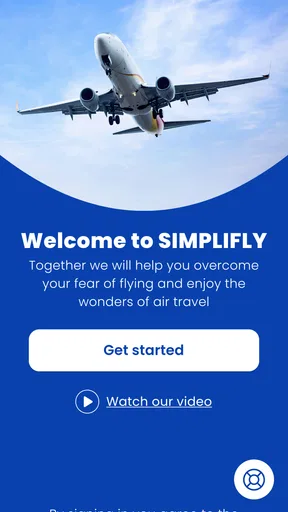
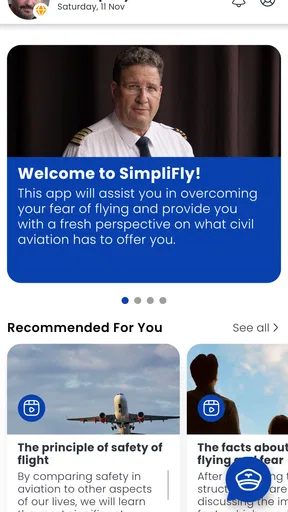
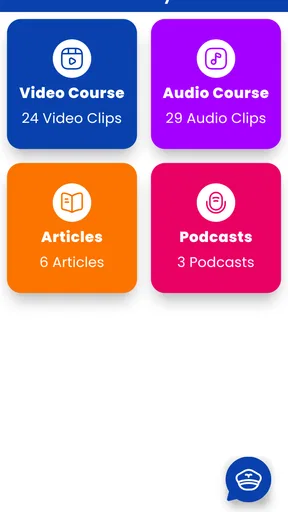
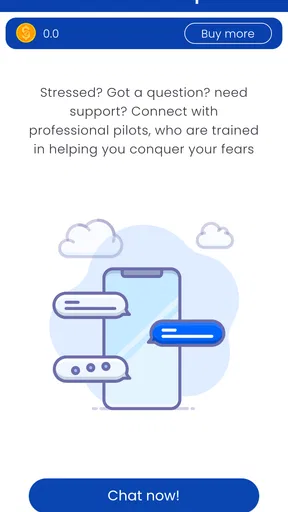
 Analysis by AppCompare
Fear of flying can turn a simple trip into a long period of anticipation, and that is the problem SimpliFly: Fly with Confidence tries to address. I approached it as a travel companion rather than a replacement for professional care, looking at whether it could remain useful after the initial curiosity wears off. My first impression was that its purpose is refreshingly focused: it is built around the SimpliFly program and aerophobia, not around general travel planning, airport deals, or flight tracking.
That narrow focus is important. If you are searching for maps, boarding passes, hotel reservations, or destination ideas, this is the wrong kind of travel app. If your main obstacle is the emotional experience of getting on a plane, however, the app has a clear reason to exist. It is free to download, rated for Everyone, and developed by BANNER HOLDINGS AND MANAGEMENT SERVICES LTD. The app has reached over 50 thousand installs and holds a 4.5 average from around 135 ratings, which suggests that its subject connects with a meaningful group of travelers, even though those numbers should not be treated as a guarantee that it will suit every kind of anxiety.
What the first week feels like
During the first week, the appeal comes from having one place devoted to a fear that is often difficult to explain to friends and family. People who do not experience aerophobia may say that flying is statistically safe or that the trip will be over soon. Those comments rarely help when the body is already reacting to the airport, the aircraft, the noises, or the loss of control. A dedicated program can feel more relevant because it starts with the actual concern instead of asking the traveler to adapt a general meditation or wellness tool.
I found the app’s strongest early value in the way it gives the fear a defined object. Rather than treating nervousness as a vague personal weakness, SimpliFly frames it as something a person can work with. That change in perspective matters before a flight, when anxious thoughts tend to jump from one possibility to another. Opening an app that is specifically about flying can make preparation feel more deliberate than simply searching the internet for reassurance.
A realistic use case would be someone with a flight booked several weeks away who usually begins worrying long before departure. Instead of waiting until the night before, that person can make the program part of a calm preparation routine. A short session at a predictable time may be easier to maintain than trying to absorb a large amount of advice in a panic at the airport. I would use it well before the journey, when I could pay attention and notice which parts of the experience were most uncomfortable.
The first-week experience is also when expectations need to be controlled. This is not a magic switch that makes fear disappear after one opening session. Anxiety is often connected to anticipation, physical sensations, past experiences, and the feeling of being unable to leave. An app can help someone prepare, but it cannot promise that every flight will feel comfortable. I would judge the early benefit by asking whether it makes the fear more understandable and manageable, not whether it removes every nervous reaction.
One practical tip is to avoid testing the app for the first time while standing in a boarding queue. That is the least useful moment to learn how any program fits into your routine. Try it in a quiet setting, then decide which parts you would realistically revisit before traveling. This separates genuine usefulness from the temporary relief of downloading something new after anxiety has already peaked.
Worth Reading Before You Choose

Flipboard Shows What News Apps Must Do Beyond the Feed

Switching to Android Auto Means Rethinking Your Driving Routine

Google Calendar Makes a Crowded Week Easier to Manage

Ludo King Makes the Most of the Minutes Between Plans

Baby Panda World Brings Quick Play to Modern Phones, but Its Game Library Feels Busy

ESPN’s Live Game View Makes Following Close Games Easier
Who is most likely to benefit early
SimpliFly seems best suited to occasional or moderate fear of flying, especially for someone who wants guided preparation without immediately committing to a course, a group, or an appointment. It may also help a frequent traveler who flies successfully but spends days dreading each trip. The app’s travel-and-local classification makes sense because its value appears at the intersection of travel planning and emotional preparation, rather than ordinary entertainment or general self-improvement.
I would be more cautious if your fear causes severe panic, leads you to avoid essential travel, or is part of a broader mental-health difficulty. In that situation, an app can be a useful supplement, but professional support may be the better foundation. It is also not the right choice for someone who wants detailed aviation education, live flight information, or immediate personal feedback from a specialist. Its focused format is a strength for the right user and a limitation for everyone looking for a wider service.
Making the program fit a real travel plan
The most useful way to approach it is to connect the program with specific stages of a journey. I would think about the period before booking, the days leading up to departure, the airport itself, takeoff, and the return trip. That does not mean using the app continuously. It means identifying when the fear usually rises and making a plan before those moments arrive.
For example, a traveler who becomes tense during packing may use the program as a transition into preparation, while someone who feels fine at home but struggles at the gate may reserve a familiar routine for that part of the day. A person who worries about turbulence might need a different preparation strategy from someone who fears crowded airports. The app cannot make that personal distinction for you, so the user still has to observe their own pattern and apply the material thoughtfully.
I also recommend writing down one or two concrete observations after each early session, such as the thought that triggered tension or the physical sensation that followed. This is not a feature claim about the app; it is a way to make the program more useful. Without that small act of reflection, it is easy to consume anxiety content passively and mistake recognition for progress. The real test is whether you become better at noticing the beginning of the fear and responding before it takes over.
Whether it remains useful after the novelty fades
The harder question is not whether a dedicated flying program feels appealing when a trip is approaching. The harder question is whether it earns a lasting place on a phone between journeys. My view is that its recurring value depends heavily on travel frequency and on whether the user turns it into a light maintenance habit. Someone who flies once every few years may return only when a new booking creates a reason. Someone who travels several times a year has more opportunities to use the program as preparation and review.
That does not make occasional use pointless. In fact, the app may be most valuable as a pre-flight refresher rather than a daily destination. A person who completed the program before a previous trip may want to revisit it before the next one, especially if a difficult flight has renewed old worries. The important distinction is between returning with a purpose and opening the app out of obligation. A forced daily routine could make the subject feel heavier, while a short, planned check-in may keep the material connected to real travel.
The current version is 8.00.62, and the app has been available since July 13, 2021. Those details tell me that this is not simply a brand-new experiment appearing for a single travel season. Still, longevity for this kind of tool is not measured only by how long it has been available. It is measured by whether the user can remember and apply what they learned when the aircraft door closes. The lasting benefit should be practical carryover, not an endless cycle of opening the app for reassurance.
Maintenance without turning fear into homework
I would build a maintenance routine around actual flights. Before a trip, revisit the parts that address your personal trigger rather than starting from the beginning every time. After the flight, take a few minutes to note what happened, what you expected, and what was different from that expectation. This creates a useful record of experience and can weaken the feeling that every flight is an entirely unknown event.
Another helpful approach is to keep the routine small enough that it survives busy weeks. The danger with anxiety programs is that users sometimes design an ambitious schedule, miss it, and then interpret the missed sessions as another failure. SimpliFly is more likely to remain useful if it becomes a simple part of travel preparation, like checking documents or planning the route to the airport, rather than a demanding project that competes with work and family responsibilities.
There is also a trade-off in the app’s focused subject. Because it concentrates on aerophobia, it can feel more relevant than a general relaxation app when the fear is specifically linked to flying. At the same time, it may not offer enough breadth for someone whose anxiety also affects trains, elevators, crowds, health worries, or everyday situations. A general mental-wellness tool may be more useful for those wider concerns, while a therapist may be better when the fear has become deeply rooted or disruptive.
Where recurring costs may affect the decision
The app is free, but it includes in-app purchases ranging from $13.49 to $134.99 per item. That is a significant point to consider before treating the free download as a complete solution. I would first explore the accessible part of the experience and decide whether the program’s approach feels relevant before spending money. The lower end may be reasonable for someone who gains clear value from the material, while the higher end requires a much stronger sense that the program will be used repeatedly.
Because fear of flying is personal, the right value judgment is not simply “cheap” or “expensive.” Ask whether the app helps you take a trip you might otherwise avoid, whether it complements other support, and whether you will realistically return to it. Someone who flies often and wants a repeatable preparation tool may see more value than someone who has one distant trip and rarely travels. I would also avoid paying during a moment of panic without first giving myself time to evaluate the program calmly.
Age rating is another practical advantage: the app is suitable for Everyone. That makes it easier to consider for a household where more than one traveler feels nervous. Even so, an Everyone rating does not mean that every person will respond to the material in the same way, or that a child’s fear should be handled without an adult understanding what is causing it. For younger travelers, I would use it as part of a supportive conversation rather than handing over the entire responsibility to an app.
What can create fatigue over time
The main source of fatigue is repetition without a clear reason to return. If every visit feels like another attempt to convince yourself that flying is safe, the app may become part of the anxiety loop instead of a way out of it. Reassurance can be comforting in the moment, but long-term confidence usually requires learning to tolerate some uncertainty and noticing that you can complete the travel process even while feeling nervous.
Another possible friction point is the gap between a calm phone session and the sensory intensity of an airport. A quiet room cannot fully reproduce announcements, queues, engine sounds, cabin movement, or the feeling of being unable to leave. That is not a failure unique to this app; it is a challenge for almost every digital tool in this category. I would treat SimpliFly as preparation for those sensations, not as a perfect rehearsal of them.
There can also be fatigue when the user expects the program to answer questions that are actually about a specific flight. If you want to know why a particular route is delayed, what turbulence means on today’s aircraft, or whether a connection will be missed, a flight-information service is the better tool. If you want to explore a personal history of panic or avoidance, a qualified professional can ask questions and adapt the conversation in a way an app cannot.
For that reason, I would not recommend making it the only support for a person who has stopped flying altogether because of fear. It may help create a starting point, but the next step could involve a clinician, a structured exposure plan, or a conversation with a medical professional. The app works best when its role is clear: preparation, reflection, and confidence-building around air travel, not diagnosis or emergency intervention.
How I would use it before and during a flight
My preferred workflow would begin several days before departure, not at the airport. I would use a quiet session to identify the thoughts that appear most often, then connect those thoughts to the practical stages of the journey. On the day of travel, I would avoid repeatedly checking the app whenever anxiety rose. Instead, I would choose one planned moment to use the material, then shift attention to a concrete task such as finding the gate, drinking water, or speaking with a travel companion.
That approach protects against a subtle downside: turning the app into a safety behavior that must be consulted every few minutes. If you believe you can cope only after checking it again, the reassurance may be maintaining the fear. A better sign of progress is being able to remember the key ideas without constantly reopening the program. I would judge success by increasing flexibility, not by achieving a perfectly calm airport experience.
After landing, I would resist the temptation to dismiss the flight simply because it ended. A short review can highlight what you handled well, including moments when anxiety was present but did not control your actions. This is where a focused program can gain month-to-month value: each trip becomes evidence that fear and travel can coexist. The app cannot create that evidence by itself, but it can help you approach the experience in a more organized way.
My long-term verdict on SimpliFly
SimpliFly: Fly with Confidence earns consideration because it addresses a specific travel problem with a specific program. I like that clarity. In a category crowded with broad relaxation tools and scattered online advice, a dedicated aerophobia app can feel more useful to someone whose fear appears mainly around air travel. Its free entry point and Everyone rating make it easy to investigate, while the 4.5 average from around 135 ratings indicates encouraging reception from the people who chose to rate it.
My recommendation is strongest for travelers who want structured preparation and are willing to practice between moments of panic. It is less convincing as a permanent daily app for everyone. If you fly rarely, you may only need it around a booking. If you fly often, it can become a repeatable pre-flight routine, provided you use it to build independence rather than to seek endless reassurance. The in-app purchase range also means that long-term value should be judged carefully before committing to the more expensive option.
The app should be skipped, or at least paired with other support, when the fear is severe, generalized, or connected to a crisis that requires personal care. It is also not a substitute for live travel information, professional treatment, or a companion who understands how to support you in the airport. Those are not minor exceptions; they define the situations in which another option may be better.
After the novelty fades, I believe the app’s place depends on habit with a purpose. Use it before real flights, revisit the parts that match your triggers, and reflect on what you managed afterward. Do that, and SimpliFly can become a practical tool in a travel routine rather than another forgotten download. Its lasting strength is not promising a fear-free flight; it is helping the right traveler approach flying with more preparation and control.
Pros
- Simple interface makes flight planning quick and easy.
- Useful flight information helps reduce travel uncertainty.
- Confidence-building guidance can benefit nervous flyers.
- Convenient mobile access keeps trip details available on the go.
- Suitable for beginners who prefer straightforward aviation content.
Cons
- Some features may require an internet connection to work properly.
- Information may not replace official airline or airport updates.
- Advanced travelers may find the tools too basic.
- Flight coverage and accuracy can vary by region.
- Extra notifications may feel unnecessary for frequent flyers.
FAQs for SimpliFly: Fly with Confidence
What is SimpliFly: Fly with Confidence?
SimpliFly: Fly with Confidence is designed to help travelers feel more prepared and comfortable before and during air travel. The app focuses on practical guidance, reassuring information, and tools intended to reduce uncertainty around flying. It may be useful for occasional travelers, nervous flyers, or anyone who wants a clearer overview of what to expect at the airport and onboard an aircraft.
How can SimpliFly help people who are afraid of flying?
The app provides educational and confidence-building content that can help users understand common aspects of air travel, including airport procedures, aircraft experiences, and situations that may otherwise feel unfamiliar. By explaining what passengers can expect and offering calming guidance, SimpliFly may make flying feel more manageable. It should complement, rather than replace, professional support for severe anxiety.
Does SimpliFly: Fly with Confidence work without an internet connection?
Offline availability can depend on the specific feature, content, and version installed on your device. Some information may be accessible after it has been loaded, while other sections could require an active internet connection. If you plan to use SimpliFly during a flight or while traveling abroad, it is sensible to open the app beforehand and check whether the relevant materials remain available offline.
Is SimpliFly suitable for first-time flyers and frequent travelers?
Yes, the app can be useful for both audiences, although the benefits may differ. First-time flyers can use it to become familiar with airport routines and the flying experience, while frequent travelers may appreciate reassurance or quick access to confidence-focused guidance. Its usefulness will depend on your personal concerns, the features included in the current release, and how much preparation you want before a trip.
Is SimpliFly: Fly with Confidence free to download and use?
The download model, available features, advertisements, and any optional purchases may vary between the Android and iOS versions and can change with future updates. Before installing, review the app-store listing for the current price, subscription details, and in-app purchase information. Also check the requested permissions and privacy details so you understand what access the app requires before using it.


